
There was a time when ownership defined progress.
You owned your home.
You owned your car.
You owned shelves of books, racks of clothes, stacks of CDs, perhaps even a filing cabinet full of papers that proved what was yours.
Ownership meant stability. It meant permanence. It meant security.
But something has been quietly shifting.
Today, many of the things we use every day are no longer ours in the traditional sense. Music lives in the cloud. Films stream and disappear from digital libraries without notice. Software updates itself monthly, tied to subscriptions rather than purchases. Cars are leased. Offices are shared. Even wardrobes can be rented by the week.
Increasingly, we pay not to possess — but to access.
This shift has not arrived with drama. It has crept in through convenience.
Streaming is easier than storing.
Leasing is simpler than maintaining.
Subscription is lighter than commitment.
Ownership once required space — physical and mental. It meant responsibility. Insurance. Repairs. Storage. The quiet weight of maintenance. Access, by contrast, offers fluidity. It allows movement. It reduces friction. It promises freedom.
In dense cities especially, ownership can feel burdensome. Parking is scarce. Storage is expensive. Moving is frequent. The lighter we travel, the easier life seems to become.
So the question arises: if this trend continues, what will ownership look like in 30 years?
Will we still buy cars — or will transport simply arrive when summoned?
Will furniture be delivered and replaced as needed?
Will homes be assets — or services?
Will clothing rotate seasonally through shared systems rather than individual wardrobes?
Perhaps we will still own certain essentials. Perhaps ownership will shrink rather than vanish — concentrated in fewer, more meaningful possessions. Or perhaps the idea of ownership itself will evolve into something less tangible.
There is a deeper question beneath the practical one.
If we own less, what happens to identity?
For generations, possessions have signalled who we are. A bookshelf revealed taste. A car revealed status. A house revealed security. Objects anchored memory. They marked milestones.
If our lives become subscription-based, more fluid, more temporary — do we become lighter? Or less rooted?
The answer may not be binary.
Ownership has always offered comfort. It suggests continuity. It creates a sense of control over an uncertain world. Yet it also binds us. Mortgages restrict movement. Maintenance demands time. Accumulation fills rooms and sometimes weighs on the mind.
Access models promise flexibility. They fit a faster, more mobile society. They allow cities to breathe differently — fewer parked cars, more shared infrastructure, less duplication of goods sitting unused.
But flexibility can also introduce fragility. If everything is rented, streamed, or licensed, what truly belongs to us? What remains if access is revoked?
Perhaps the shift is not about owning nothing — but about redefining value.
Instead of measuring stability by what we possess, we may measure it by what we can access reliably. Instead of permanence, we may prioritise adaptability. Instead of accumulation, we may favour mobility.
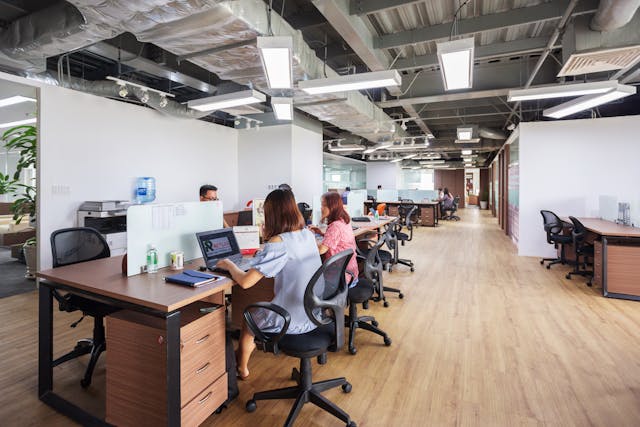
Cities already reflect this transformation. Shared bicycles line pavements. Flexible workspaces replace traditional offices. Apartment living expands while storage units multiply on the outskirts. The architecture of ownership is slowly rearranging itself.
And yet, even in this fluid world, the human instinct to anchor remains.
We still seek something stable — whether that is a home, a community, a digital identity, or simply a handful of objects that feel entirely our own.
Thirty years from now, we may not own as much as previous generations did. Our lives may be structured more around networks than possessions, more around access than accumulation.
But ownership may not disappear. It may simply become more deliberate.
Perhaps we will own fewer things — and choose them more carefully.
Perhaps we will build identities less around what sits in our cupboards, and more around how we move through the world.
The future of ownership may not be about loss.
It may be about lightness.
And the question will not be whether we own anything at all — but what, in a more fluid world, we decide is worth holding onto.
—
GertieBlu